Intel / Diplomatic Activity
OSINT intel briefs, structured summaries, and trend signals. Topic: Diplomatic-Activity. Updated briefs and structured summaries from curated sources.
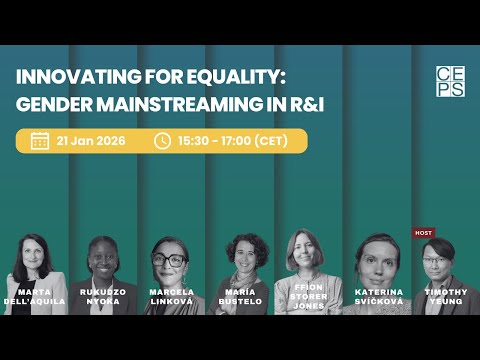
Innovating for equality: gender mainstreaming in R&I
Full timeline
0.0–300.0
The event addresses gender equality and mainstreaming within the EU's Horizon Europe Framework Programme, highlighting three key dimensions: equality in research teams, decision-making processes, and gender integration in research and innovation. Funded by the Gates Foundation, the project aims to identify successes and gaps in gender representation and provide recommendations for future improvements.
- The event focuses on gender equality and mainstreaming within the EUs Horizon Europe Framework Programme
- Three main dimensions of gender issues in research and innovation are identified: equality in research teams, decision-making processes, and integration of gender in R&I
- The project is funded by the Gates Foundation and includes streams on EU R&I policy, health, and gender
- Marta Diaguela and Rukuso New Yorker are the authors presenting their research on gender mainstreaming in R&I
- The presentation will highlight successes and gaps in gender representation in previous framework programs
- Recommendations for improving gender equality in future framework programs will be discussed
300.0–600.0
Gender equality and gender mainstreaming are emphasized as core priorities under Horizon Europe, addressing persistent gaps in research and innovation. The program mandates gender equality plans for public institutions and promotes the integration of gender perspectives in research activities.
- Gender equality and gender mainstreaming are core priorities under Horizon Europe, addressing persistent gender gaps in research and innovation
- Mandatory gender equality plans for public institutions since 2022 expand gender mainstreaming into organizational structures
- The systematic integration of gender perspectives into research content promotes universal gender considerations in research activities
- Programs like UniSafe highlight the challenges of gender-based violence faced by female researchers in academia
- Horizon Europe allows self-identification as non-binary, enhancing representation of diverse voices in research
- Women represent only 34% of researchers at the EU level, with a slight increase from the previous framework program
- Only 7% of women have access to venture capital funding, despite significant financial resources available
- % of researchers in Horizon Europe are female, yet few hold higher authority or managerial positions
- Only 31% of women lead consortia, indicating a need for greater female representation in leadership roles
600.0–900.0
The study introduces a theoretical framework for integrating gender equality into research and innovation, emphasizing three interdependent dimensions: structural, epistemic, and substantive. Horizon Europe mandates gender equality plans for funding eligibility and highlights the importance of gender balance in research teams and methodologies.
- The study proposes a new theoretical framework for integrating gender equality into research and innovation
- Horizon Europe requires a gender equality plan for funding eligibility
- Three levels of gender equality integration are identified: gender equality plans, gender aspects in research methodologies, and gender balance in evaluation committees
- The framework emphasizes three interdependent dimensions: structural, epistemic, and substantive
- The structural dimension includes formal policies like gender equality plans and balanced research teams
- The epistemic dimension focuses on meaningful integration of gender in research content and methodologies
- The substantive dimension addresses specific work streams on gender studies and intersectionality
- The analysis highlights a growing use of intersectional approaches in Horizon Europes work programs from 2021 to 2025
- Concerns remain regarding the ambiguous framing of gender requirements and the perception of gender integration as a tick box exercise
- There is a noted lack of emphasis on collecting sex and gender disaggregated data across research clusters
900.0–1200.0
The EU's Horizon Europe Framework Programme emphasizes gender equality and mainstreaming, identifying gaps in research topics related to digitalization and women's health. Recommendations include mandatory gender equality plans for all legal entities and the promotion of intersectional research to enhance evidence-based decision-making.
- Gender equality and mainstreaming are central to the EUs Horizon Europe Framework Programme
- There is a notable lack of research topics addressing digitalization and the green transition from a gender perspective
- Womens health remains a systemic blind spot in both past and current framework programs
- The report emphasizes the need for aligning gender policy and research priorities to enhance evidence-based decision-making
- Intersectional research is recommended to better represent diverse social group experiences and inequalities
- Existing guidelines for gender mainstreaming in research should be enforced to avoid superficial compliance
- Gender equality plans should be mandatory for all legal entities, not just public institutions
- The EU is encouraged to leverage its influence to promote gender equality in associated and unassociated countries
- A gender budget tracking tool developed by the European Commission should be standardized and enhanced with metrics on research outcomes
1200.0–1500.0
The European Union's Horizon Europe Framework Programme emphasizes the importance of gender equality and mainstreaming in research and innovation. Recent discussions highlight the need for guidelines on topics that may not require the integration of the gender dimension.
- The European Unions Horizon Europe Framework Programme emphasizes gender equality and mainstreaming in research and innovation
- Guidelines are recommended for topics that may not require the integration of the gender dimension in research
- The panel discussion includes perspectives from policy, academia, and personal experiences related to gender equality
- Catherine, head of the gender sector at DG Research Innovation, is among the panelists discussing effective approaches to gender equality
- The conversation aims to translate commitments into concrete instruments and knowledge production
- The importance of both formal structures and ground-level experiences in advancing gender equality is highlighted
- Recent initiatives funded by the EU demonstrate structured approaches to addressing gender equality in research
1500.0–1800.0
The European Union's Horizon Europe Framework Programme emphasizes the integration of gender equality and mainstreaming across its initiatives. The new FB 10 proposal aims to harmonize gender equality measures and establish a performance regulation for tracking related budget expenditures.
- The European Unions Horizon Europe Framework Programme emphasizes gender equality and mainstreaming
- FB 10 is a new proposal that aims to harmonize gender equality across EU programs
- The proposal includes a performance regulation for tracking budget expenditure related to gender equality
- Horizon Europe will promote gender equality and equal opportunity as core principles
- The integration of gender dimensions in research content and evaluation processes is a key focus
- Current practices in gender equality plans will continue under the new FB 10 proposal
- The European Parliament and Council are currently negotiating the proposal package
- The methodology for tracking gender equality expenditure is yet to be defined for future programs
1800.0–2100.0
The European Union's Horizon Europe Framework Programme focuses on gender equality and mainstreaming within research and innovation. Over 3,355 organizations have participated in gender equality plan implementation projects, supported by nearly 80 million euros.
- The European Unions Horizon Europe Framework Programme emphasizes gender equality and mainstreaming
- Gender equality plans are integral to organizations and institutions as part of the European research area
- An action plan for women in research and innovation is being developed to assess current political contexts
- Over 3,355 organizations participated in gender equality plan implementation projects, supported by nearly 80 million euros
- The projects have built knowledge on fostering structural change towards gender equality in organizations
- Collaboration with member states has led to deliverables like a zero tolerance code of conduct against gender-based violence
- A recent report summarizes insights from 23 EU-funded projects related to gender equality
- Public consultations for the action plan are expected to launch soon, inviting stakeholder input
2100.0–2400.0
The European Union's Horizon Europe Framework Programme emphasizes the integration of gender equality in research initiatives. Ongoing negotiations for the next framework program present both opportunities and risks for advancing gender equality.
- Gender equality and mainstreaming are central to the European Unions Horizon Europe Framework Programme
- The integration of the gender dimension is crucial for successful research initiatives
- There is a robust agreement on the need for inclusive gender equality within the European research area
- Past achievements in gender equality over the last 5 to 70 years are significant and should be acknowledged
- The ongoing negotiations for the next framework program present both opportunities and risks for gender equality initiatives
- Historical transitions between framework programs have shown the potential for both progress and regression in gender action plans
- The importance of policy frameworks in defining values and rewards in research environments is emphasized
- Collaboration and openness are essential conditions for research, which gender equality can enhance
2400.0–2700.0
The European Union's Horizon Europe Framework Programme emphasizes the importance of gender equality and mainstreaming in research initiatives. There are significant challenges in maintaining policy momentum and ensuring adequate funding for gender research.
- The European Unions Horizon Europe Framework Programme emphasizes gender equality and mainstreaming
- There is a significant challenge in maintaining policy momentum for gender equality initiatives
- Inclusive gender equality is essential for effective research and societal solutions
- Intersectionality and inclusiveness are critical components of gender equality plans in research
- Funding for gender research remains minimal within the broader framework programs
- Gender budgeting is a key objective for future funding initiatives
- Mainstreaming gender across all policy priorities is currently lacking
- Academic freedoms are under threat, impacting research integrity and safety
- Gender equality plans are recognized as powerful tools for advancing gender equality
2700.0–3000.0
The European Union's Horizon Europe Framework Programme emphasizes the importance of gender equality and mainstreaming in research initiatives. Monitoring and compliance checks for gender equality initiatives are crucial for maintaining progress and addressing disparities in academia.
- Gender equality and mainstreaming are central to the European Unions Horizon Europe Framework Programme
- The importance of monitoring and compliance checks for gender equality initiatives is emphasized
- Gender equality officers play a crucial role in implementing gender equality measures within organizations
- Career structures and performance assessments in academia often reflect gender disparities
- Recognition of career breaks and part-time work is essential for fair evaluation and progression in research careers
- The need for structural approaches to address gender equality issues in academia is highlighted
- Recent advancements in gender equality are at risk due to emerging threats
- Collaboration and alliances are necessary to continue progress in gender equality within research
3000.0–3300.0
The European Union's Horizon Europe Framework Programme has emphasized the importance of gender equality and mainstreaming in research and innovation for the past 15 years. Recent advancements include the Gibbs eligibility criterion and a focus on intersectionality and civil tolerance regarding gender-based violence.
- The European Unions Horizon Europe Framework Programme emphasizes gender equality and mainstreaming in research and innovation
- Structural changes in gender policies have been in place for 15 years, significantly impacting advancements in gender equality
- Funding for gender mainstreaming and feminist research is crucial for ongoing progress in equality issues
- Recent advancements include the Gibbs eligibility criterion and a focus on intersectionality and civil tolerance regarding gender-based violence
- There is a recognition of the need for a more structural approach to address intersecting inequalities beyond just gender
- Monitoring and evaluation of gender policies are essential for effective implementation and progress tracking
3300.0–3600.0
The European Union's Horizon Europe Framework Programme highlights the necessity of gender equality and mainstreaming in research. Current evaluation methods for gender structural policies are deemed inadequate, necessitating a more transformative approach to monitoring and evaluation.
- The European Unions Horizon Europe Framework Programme emphasizes gender equality and mainstreaming
- Monitoring and evaluation of gender mainstreaming implementation are crucial for transformative change
- Current evaluation methods, such as the better regulation approach, are inadequate for assessing gender structural policies
- Understanding the intersection of privilege and gender is essential for addressing disparities in scientific fields
- Involving men in equality policies is vital for fostering a fair and inclusive research environment
- Women and feminists have historically contributed significantly to peace-making efforts
- Womens health research remains underfunded despite advancements, highlighting gaps in research priorities
- The link between peace, security studies, and feminism is increasingly recognized as important
3600.0–3900.0
The EU's Horizon Europe Framework Programme emphasizes the need for gender equality in research and innovation, particularly in women's health. Despite increased investment, only 7% of global health research focuses on women's health, highlighting significant gaps in funding and attention.
- The EUs Horizon Europe Framework Programme emphasizes gender equality in research and innovation
- Only 7% of global health research focuses on womens health, with much of it centered on oncology
- The importance of systematically addressing gender equality in both public and private sectors is highlighted
- Investment in womens health research is increasing, with two billion euros allocated through Horizon 2020 and Horizon Europe
- There is a lack of cohesion in investment decisions across various health research funding channels
- The establishment of an expert group on womens health research and innovation is being advocated for better guidance
- Health outcomes are influenced by both sex as a biological variable and gender as a social variable
- The design of many health-related products and technologies often prioritizes male needs, posing risks to womens health
3900.0–4200.0
The European Union's Horizon Europe Framework Programme highlights the critical need for gender equality and mainstreaming in research, particularly in women's health. Despite some progress, significant funding gaps remain for women's specific health conditions, necessitating dedicated proposals to address these disparities.
- The European Unions Horizon Europe Framework Programme emphasizes gender equality and mainstreaming in research and innovation
- There is a significant lack of funding for womens specific health conditions, such as menopause and PCOS, despite their prevalence
- The SEPPS report highlights progress in integrating sex and gender considerations into calls for proposals, particularly in health research
- Gender equality plans have shown a positive impact on supporting women in science and research
- Mandating sex and gender disaggregated data in health research is crucial for addressing disparities and improving outcomes
- Women represent over half of the EU population and play a vital role in healthcare decision-making at the household level
- The need for dedicated calls for proposals in womens health is emphasized to ensure equitable funding and research opportunities
- Current statistics show a disparity where 81% of proposals address gender dimensions, but 98% of publications lack this focus
4200.0–4500.0
The European Union's Horizon Europe Framework Programme emphasizes the importance of gender equality and mainstreaming in health research. A new EU strategy focused on women's health issues will be launched on February 3rd in the European Parliament.
- The European Unions Horizon Europe Framework Programme emphasizes gender equality and mainstreaming in research and innovation
- A cohesive approach to sex and gender considerations in health research is being advocated, from clinical trials to regulatory frameworks
- The EU aims to incentivize the private sector to prioritize gender equality in scientific research
- Ursula Von der Leyen highlighted the EUs commitment to global leadership in promoting excellent science through gender equality
- The European Institute of Womens Health is launching an EU strategy focused on womens health issues on February 3rd in the European Parliament
- There is a call for more research on unmet medical needs of women, particularly in health sectors that are currently under-researched
- The discussion included concerns about the temporary protection status for mothers and children from Ukraine, particularly regarding policies in Belgium
4500.0–4800.0
The European Union's Horizon Europe Framework Programme emphasizes the importance of gender equality in research, highlighting that gender issues impact everyone, including men. Deeply entrenched stereotypes hinder men's acknowledgment of their own challenges related to gender, complicating efforts to address inequalities in research organizations.
- Gender equality and mainstreaming are central to the European Unions Horizon Europe Framework Programme
- The discussion emphasizes that gender issues affect everyone, including mens welfare
- Men experience negative impacts from the current unequal gender regime, affecting their mental health and participation in childcare
- Deeply entrenched gender stereotypes make it challenging for men to acknowledge their issues related to gender
- Effective communication of gender dimensions in research is easier than addressing gender inequalities within research organizations
- Men may not personally recognize gender dimensions but can understand their impact on women in their lives
- Acknowledging power differentials in research organizations is crucial to combat toxic environments and gender-based violence
- Cooperation with psychology research is needed to communicate sensitive gender issues effectively
4800.0–5100.0
The EU's Horizon Europe Framework Programme emphasizes the importance of gender equality in research, yet significant issues persist regarding women's rights and representation in academia. Many gender equality plans lack genuine relevance, and discrimination continues within the European Commission despite formal policies.
- Gender equality and mainstreaming are central to the EUs Horizon Europe Framework Programme
- There is a significant ongoing issue with womens rights and representation in academia
- Many gender equality plans in Horizon applications are often copy-pasted and lack genuine organizational relevance
- The number of female professors in universities is not increasing significantly
- Discrimination persists within the European Commission despite formal gender equality policies
- The effectiveness of Horizon Europe projects in promoting gender equality is questioned
- Gender relations are complex and involve power dynamics beyond just womens issues
- Recognizing privileges and engaging in discussions about fear can foster understanding between genders
- Intersectionality and gender-based violence are critical considerations in gender equality discussions
5100.0–5400.0
The European Union's Horizon Europe Framework Programme emphasizes gender equality and mainstreaming, with positive interim evaluations of its gender equality provisions. The latest edition of the 'She Figures' report, tracking women's leadership progress, was released in 2024, with the next planned for 2027.
- The European Unions Horizon Europe Framework Programme emphasizes gender equality and mainstreaming
- A flagship report titled She Figures has been published every three years since 2003 to track womens leadership progress
- The latest edition of She Figures was released in 2024, with the next edition planned for 2027
- Horizon Europe includes gender equality provisions that have received positive interim evaluations
- Gender Equality Plans (GEPs) have led to the adoption of policies at national levels and by organizations not initially required to implement them
- The discussion highlights the importance of changing organizational culture to support all parents, including both mothers and fathers
- Intersectionality is increasingly recognized as important in addressing gender issues beyond just womens perspectives
5400.0–5700.0
The EU's Horizon Europe Framework Programme emphasizes the integration of gender equality and LGBTQI+ perspectives in research and innovation. A panel discussing Ukrainian refugees is scheduled, highlighting the interconnectedness of gender issues and research priorities.
- Gender equality and mainstreaming are central to the EUs Horizon Europe Framework Programme
- The discussion highlights the importance of including LGBTQI+ perspectives in gender equality initiatives
- Research and innovation systems must integrate gender equality to influence funding and topic visibility
- A panel on Ukrainian refugees is scheduled for Friday morning, inviting experts to discuss related issues
- The study presented is the first outcome of a work stream focused on gender equality in research and innovation
- Future developments on gender mainstreaming in R&I are anticipated following this initial study